Why Berlin Still Has My Heart
by Dr. Maria Bendeck
As I prepare for my sixth trip to Berlin, I find myself thinking about how this city captured my heart in a way I never expected.
That is the beauty of the Abbott World Marathon Majors. They take us to places we may not otherwise choose to visit. At first, we may go because of the medal, the stars, the personal-record potential, or the goal of completing all six. We book the flight, pack our running shoes, pick up our bib, and run the race.
But sometimes, somewhere between the airport, the people, the food, the history, and the finish line, a city becomes much more than a marathon destination.
Berlin did that for me.
In September 2017, days after Hurricane Irma battered Florida and Naples, the community I call home, I stood in Berlin’s starting corrals with thousands of runners. I had spent the days before the race working and helping people affected by the storm. With my bib pinned on and the Brandenburg Gate waiting somewhere beyond the miles ahead, I could not stop wondering whether I should be running at all.
How could I celebrate a marathon while people back home were facing loss, uncertainty, and the exhausting work of recovery?
Then the race began.
The crowds surged around us. Music and cheers filled the streets. For the next 26.2 miles, I ran not only for myself, but with the people and place I had carried across the Atlantic. By the time I reached the Brandenburg Gate, I understood that Berlin was not simply another marathon to complete on my way to the original Six Star Medal. It was a city that could hold history, hardship, hope, and renewal all at once, and somehow make room for my own story too.
That is why Berlin still has my heart.
At first, I had not been especially excited about Berlin. I thought of it as one of the Majors I needed to complete. But Berlin taught me never to treat a race, or a city, as a checkbox. The marathon may bring you there, but the city asks you to look deeper.
Berlin’s history is everywhere. You feel it when you stand at the Brandenburg Gate, which is far more than the most iconic finish-line backdrop in marathon running. You feel it when you trace the path of the Berlin Wall and consider what it meant for a city to be divided into East and West, with families and lives separated by barriers that seemed impossible to overcome.
It is hard to stand in Berlin and not reflect on freedom. Many of us are fortunate to move around the world, cross borders, and travel without giving it much thought. Berlin reminds us that those freedoms are precious. Its history is not ancient history. It is visible, tangible, and still very much part of the city’s identity.
I encourage every runner who visits Berlin to go beyond the expo and the race weekend. Visit the Memorial to the Murdered Jews of Europe, often called the Holocaust Memorial. Near the Brandenburg Gate, the memorial is made up of 2,711 concrete stelae of varying heights. From the outside, it appears quiet and simple. But as you walk farther inside, the ground shifts, the stelae tower around you, and the narrow paths can leave you feeling disoriented and alone.
It is a powerful place. The memorial does not tell you exactly what you should feel, but it creates space for reflection, remembrance, and difficult conversation. It honors the Jewish victims of the Holocaust and reminds us of the human cost of hate, dehumanization, and silence.
Berlin does not hide from its past. It confronts it.
But Berlin is not defined only by what happened there. It is also a city that shows you what can rise after devastation.
The East Side Gallery is one of the places that stays with me most. Artists from around the world transformed a surviving stretch of the Berlin Wall into an open-air gallery. What was once a symbol of division, oppression, and fear is now covered in color, art, hope, and messages of peace. The wall is still there, a reminder of what was lost. But the art shows what people can create after darkness.
That feels especially meaningful to me as a runner. We all have seasons that challenge us. Injuries, losses, disappointments, illness, setbacks, and moments when we question whether we can keep going. Berlin is a reminder that resilience is not about pretending those things did not happen. It is about acknowledging them, carrying the lessons forward, and finding a way to rebuild.
The pandemic made that lesson even more real. For a time, the world stopped. Races were canceled. Airports emptied. We were separated from the people, places, and traditions that gave us connection and joy. Running became solitary for many of us. We learned not to take a crowded starting line, a spectator cheering our name, or a finish-line hug for granted.
When the world began to reopen, returning to the Major marathons felt different. It was not only about running again. It was about being together again. Berlin, a city that knows something about division and reunion, felt like the perfect place to remember what it means to come back.
And then there is the city itself: vibrant, creative, international, and full of surprises.
Berlin has wonderful traditional German food, but it also has an incredible global food scene. Get out of the marathon bubble. Walk through the neighborhoods. Sit at a café. Explore former East Berlin. Have dinner somewhere that was not on your original itinerary. Some of the best experiences are the ones you do not plan around a race schedule.
Berlin is a city of contrasts. It is serious and playful. Historic and modern. Quietly reflective, then suddenly loud, creative, and full of life. That is part of what makes you fall in love with it.
Then comes race weekend.
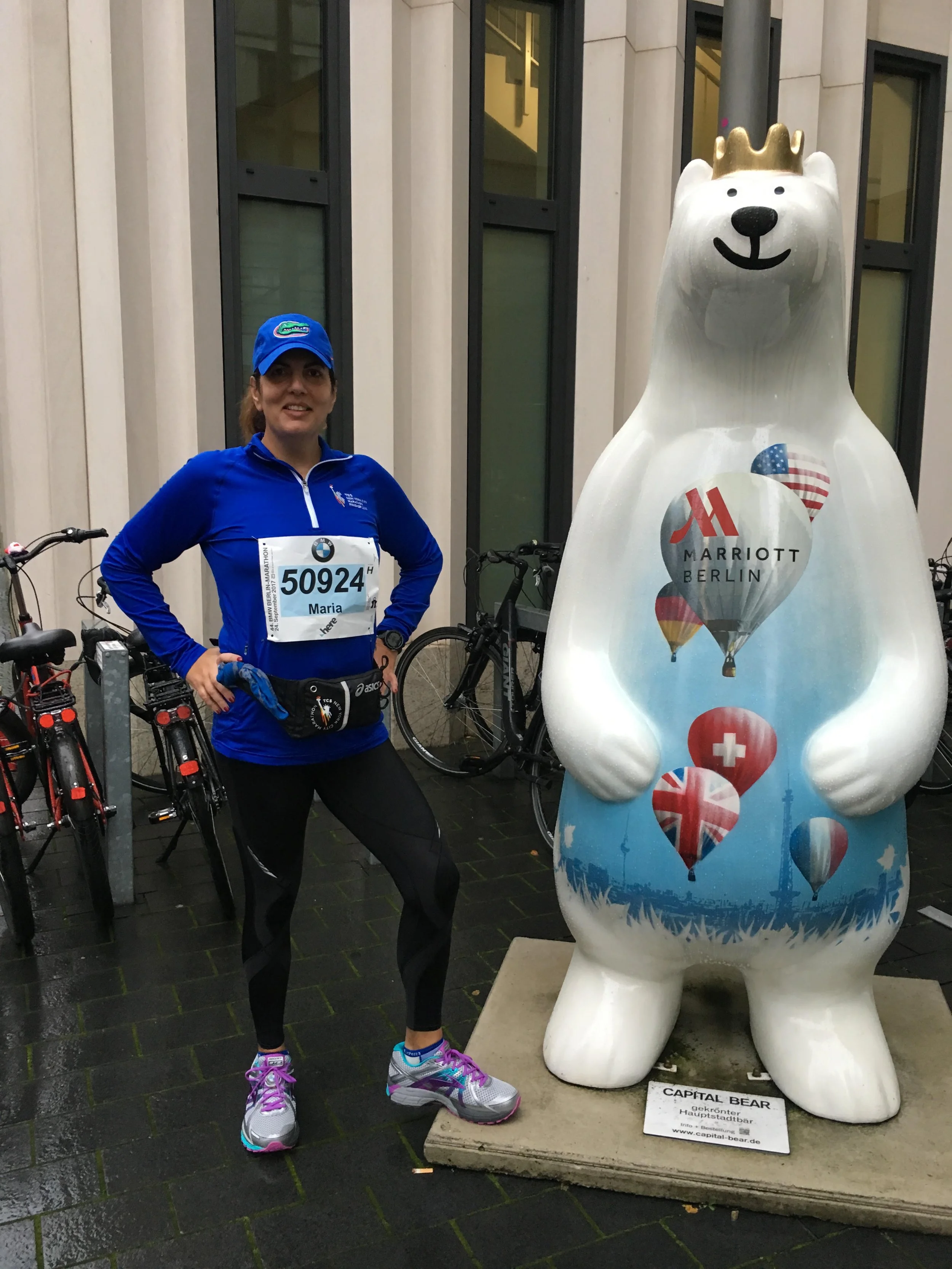
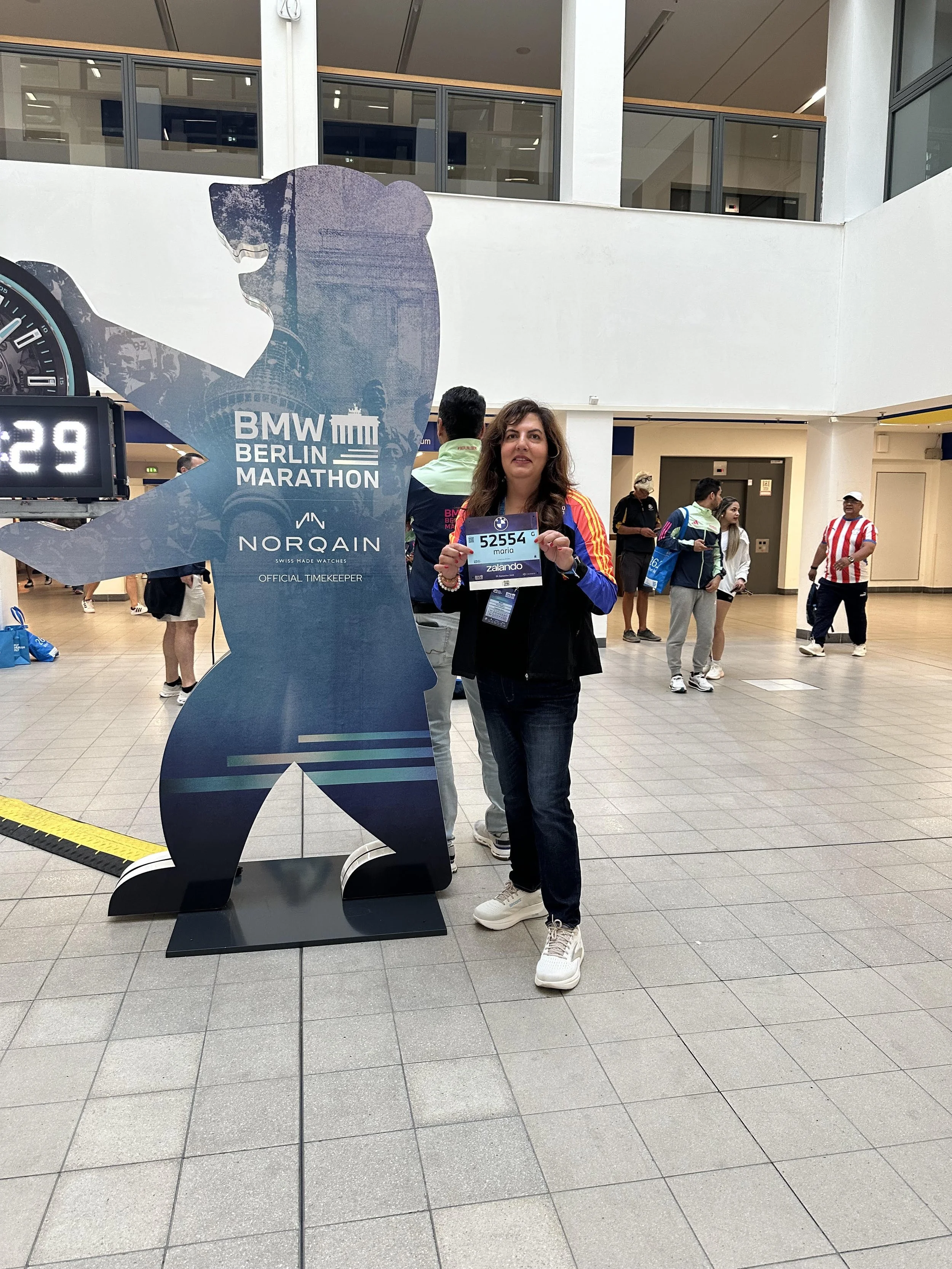
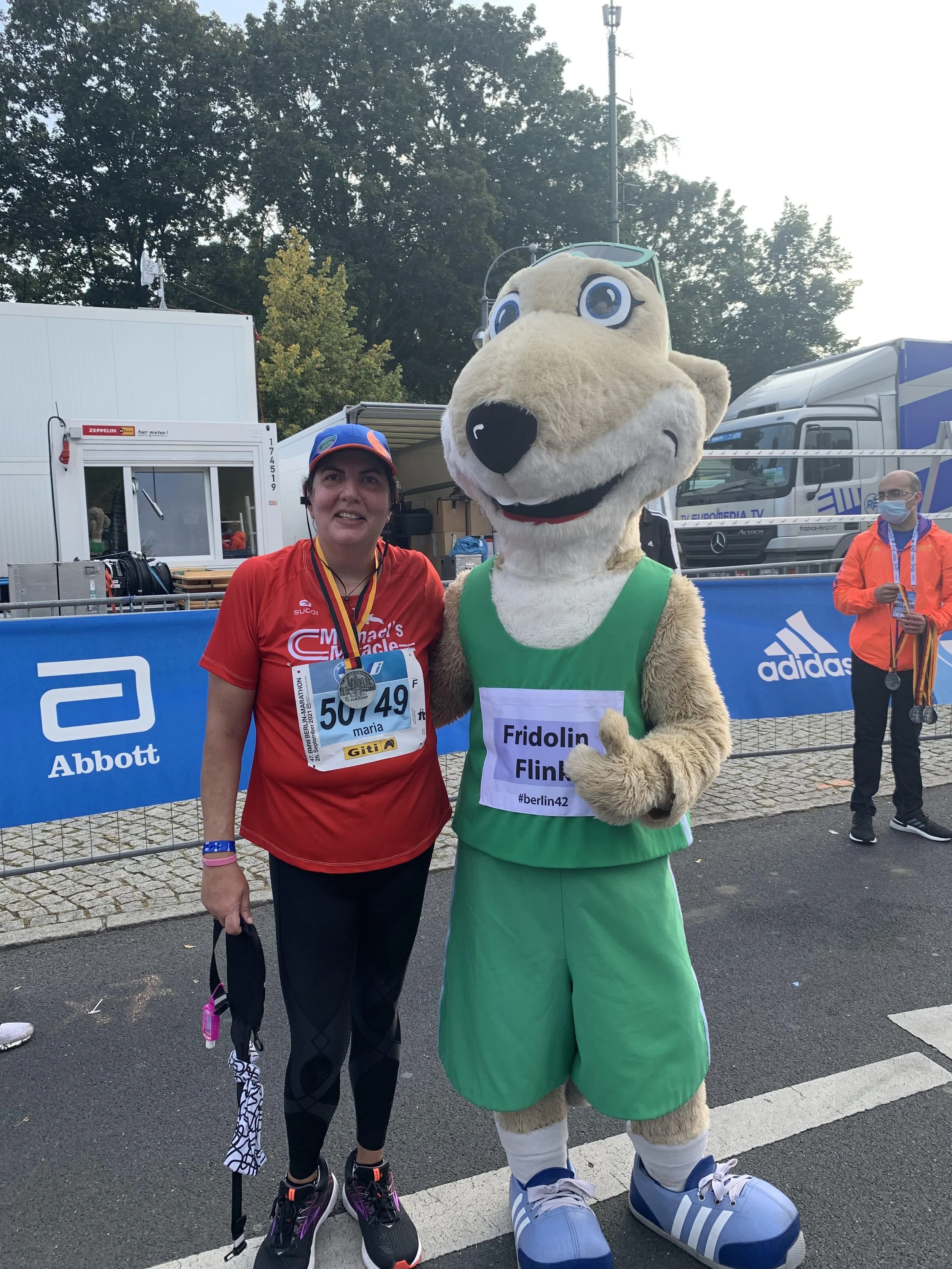
Berlin is known as one of the fastest and flattest marathon courses in the world. It is a course where world records have been set and where marathon legends have made history. Eliud Kipchoge has had unforgettable performances in Berlin, including his 2018 world-record run of 2:01:39. When you run these streets, you feel the energy of all that history.
But the beauty of Berlin Marathon is that the course belongs to every runner.
It belongs to the athlete chasing a personal record. The runner hoping to qualify for Boston. The first-time marathoner. The person returning after an injury or a hard year. The runner who is simply trying to prove to themselves that they can do something difficult.
About the Author
Dr. Maria Bendeck is a board-certified internal medicine physician, writer, and avid marathoner. A four-time Abbott World Marathon Majors Six Star Finisher, she has completed every one of the World Majors — more than once — including Sydney, the newest addition to the series. When she's not running or practicing medicine, Maria writes about running, travel, and community, with her work featured in the USA Today Network. Follow her journey on Instagram at @running_with_the_butterflies.